Mastering the Lingo: The Ultimate Guide to Sports Card Industry Terminology
Introduction: Speaking the Language of the Hobby
If you have recently stepped into a local card shop (LCS) or scrolled through Twitter sports card threads, you might feel like you’ve landed in a foreign country. Terms like "PSA 10," "RPA," "Pop Control," and "Comps" are thrown around casually, often leaving new collectors scratching their heads.
Understanding the terminology is the first barrier to entry in the sports card industry. It isn't just about sounding smart; it is about financial protection. Misunderstanding a term like "reprint" versus "original," or not knowing the difference between a "sticker auto" and an "on-card auto," can lead to costly mistakes.
This guide serves as your comprehensive dictionary for the modern hobby. We will break down the jargon into categories: Card Types, Condition & Grading, and Market/Buying terms.
Section 1: The Anatomy of a Card
Before we get into grading or selling, we need to understand what we are actually looking at. Modern cards are far more complex than the cardboard rectangles of the 80s and 90s.
The Essentials
- Base Card: The standard card in a set. These constitute the majority of the cards in a pack and generally hold the least value unless the player is a generational talent.
- Rookie Card (RC): The most important card in a player's portfolio. These are cards released during a player's first professional season. Look for the "RC" logo shield on the card.
- Insert: A subset within a product that has a different design and lower print run than the base set. Examples include the famous "Kaboom!" or "Downtown" inserts.
- Parallel: A card that mimics the design of a base card or insert but features a different color, foil pattern, or texture. For example, a Panini Prizm card might have a "Silver," "Green," or "Gold" parallel. Parallels are often much rarer than the base version.
Premium Features
- Autograph (Auto): A card signed by the player.
- On-Card Auto: The player signed directly on the card surface. These are generally more desirable.
- Sticker Auto: The player signed a sticker, which was later applied to the card by the manufacturer.
- Relic / Memorabilia Card: A card containing a piece of material, such as a jersey, bat, or floorboard.
- Game-Used: The material was used in an actual professional game.
- Player-Worn: The player put the jersey on for a few seconds (usually at an event) specifically to create the card. It was not used in a game.
- RPA (Rookie Patch Auto): The holy grail for many modern collectors. This is a Rookie Card that features both a jersey patch (often multi-colored) and an autograph. High-end RPAs are often the most expensive cards in the hobby.
- Numbered (#/#): Serial numbered cards. If a card is stamped "10/99," it means only 99 copies of that specific parallel were ever made, and you hold the 10th one.
- 1-of-1 (1/1): A masterpiece. The only copy of that specific card in existence.
Section 2: Condition, Storage, and Grading
Once you have the card, its value is entirely dependent on its condition.
Storage Terms
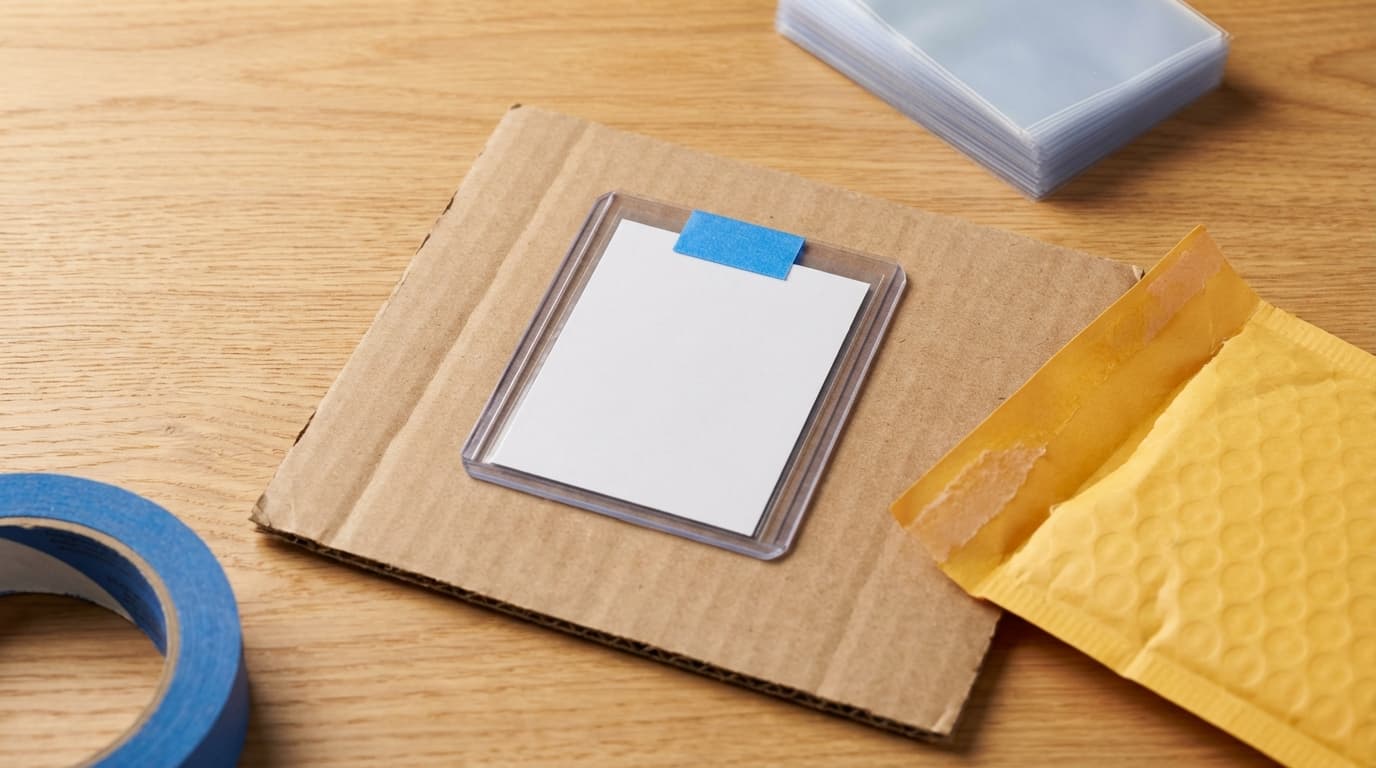
- Penny Sleeve: A thin, soft plastic sleeve that is the first line of defense against scratches. Every valuable card should go in a penny sleeve first.
- Toploader: A rigid plastic holder that a penny-sleeved card slides into. This protects against bending.
- One-Touch (Mag): A thick, magnetic hard case often used for displaying premium cards.
- Team Bag: A resealable plastic bag used to seal a Toploader or One-Touch to prevent dust entry.
Grading Terminology
Grading is the process of sending a card to a third-party company to authenticate it and assign a condition score (1-10).
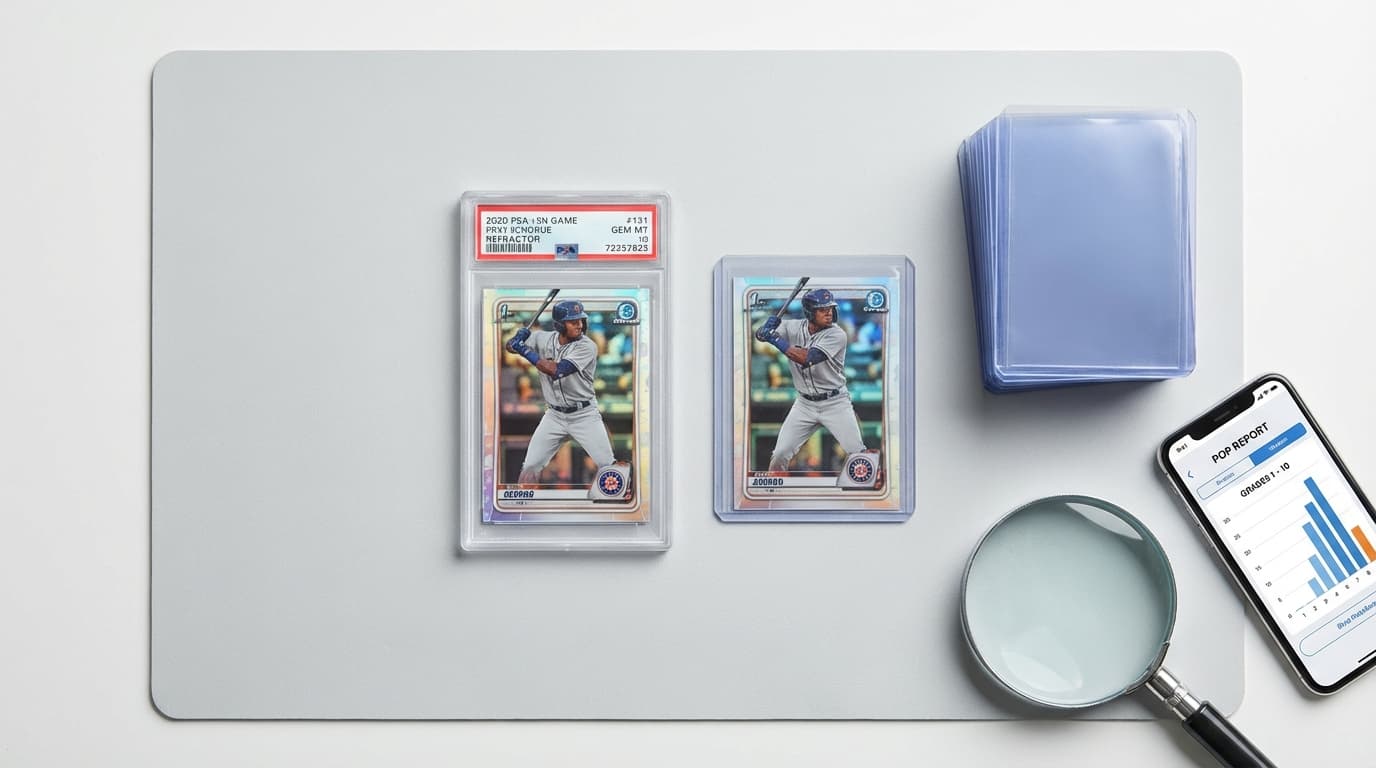
- Raw: A card that has not been graded. It is "loose."
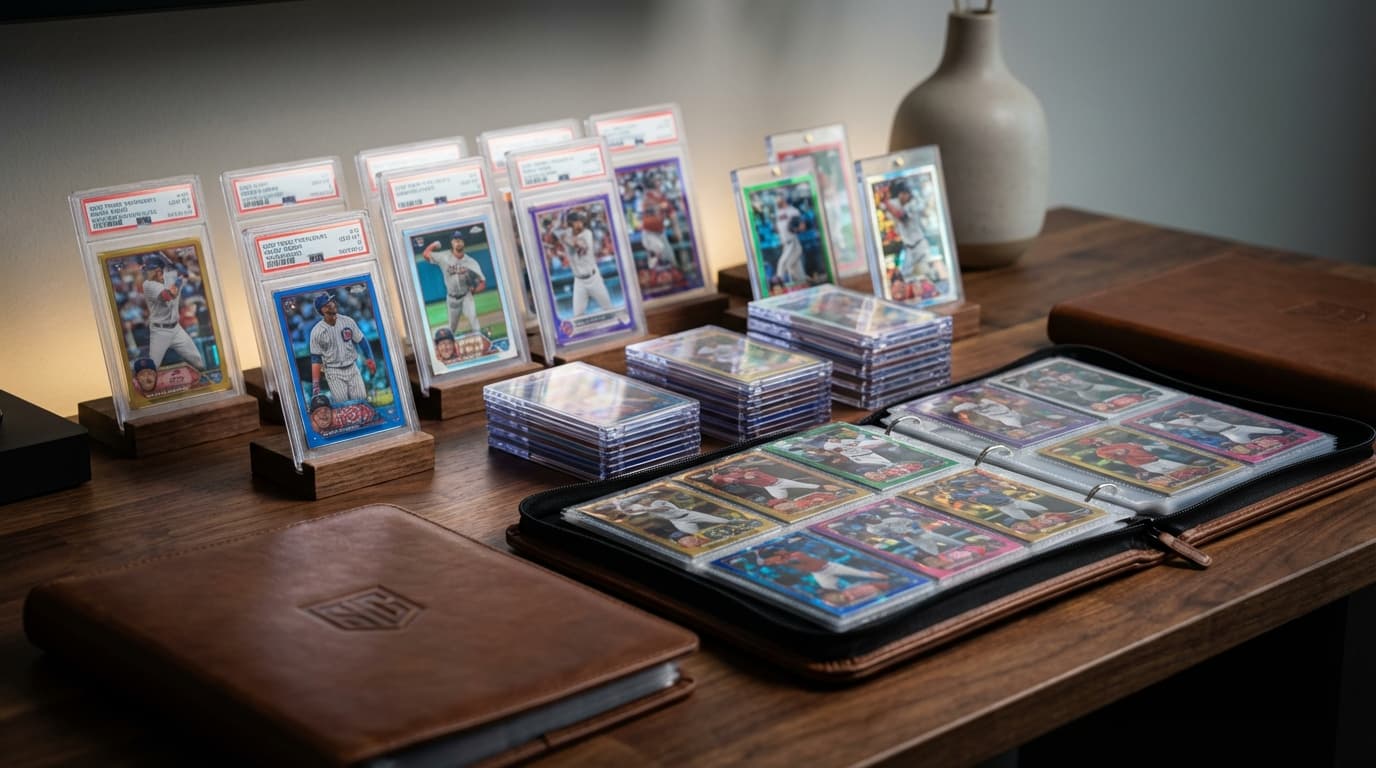
- Slab: The hard, tamper-proof plastic case a card is encased in after it has been graded.
- The Big Three: The primary grading companies.
- PSA (Professional Sports Authenticator): The market leader for value and ROI.
- BGS (Beckett Grading Services): Known for "Subgrades" (grading centering, corners, edges, and surface individually).
- SGC (Sportscard Guaranty Corporation): Known for their "Tuxedo" black slabs and fast turnaround times.
- Gem Mint: A virtually perfect card.
- PSA 10: Gem Mint.
- BGS 9.5: Gem Mint.
- BGS 10: Pristine (Better than Gem Mint).
- Centering: How perfectly aligned the image is on the card. If the border is thicker on the left than the right, the card is "off-center."
- Pop Report (Population Report): A database provided by grading companies showing exactly how many copies of a specific card exist in each grade. A "Low Pop" card means very few exist in that grade, increasing rarity and value.
- Crack / Crack-out: The act of breaking a card out of a graded slab, usually to resell it as raw or to resubmit it in hopes of getting a better grade.
Section 3: Buying, Selling, and Market Lingo
When you are ready to transact, you will need to understand the economics of the "Hobby."
Transaction Terms
- Comps: Short for "Comparables." This refers to the recent sold prices of a specific card. You never buy a card without "checking comps" (usually on eBay Sold Listings or 130point.com) to see what the market value is.
- PC (Personal Collection): Cards you own that you do not intend to sell. "This is for my PC."
- FS / FT / NFS:
- FS: For Sale.
- FT: For Trade.
- NFS: Not For Sale.
- OBO (Or Best Offer): The seller has a listed price but is willing to negotiate.
- Lot: A group of cards sold together. Buying a "lot" is often cheaper per card than buying singles.
- Flip: Buying a card (often raw), perhaps grading it or waiting for the player to have a good game, and selling it shortly after for a profit.
The "Breaker" Culture
"Breaks" are a massive part of the modern hobby where people pool money to open expensive boxes together via livestream.
- Group Break: A host opens a box/case of cards live.
- PYT (Pick Your Team): You buy the rights to all cards for a specific team (e.g., the Yankees) pulled during the break.
- Random Team: You pay a flat fee, and teams are randomized among participants.
- Hit: A valuable card pulled from a pack (usually an Auto or Relic).
- Skunked: Participating in a break or opening a box and getting zero valuable cards.
Section 4: Warning Signs and Red Flags
Finally, be aware of terms used to deceive or inflate value artificially.
- eBay 1/1: A marketing term used by sellers. It is NOT a real 1-of-1 card. It implies the card is unique because of the serial number (e.g., jersey number match 23/99 for Jordan), but technically, 98 other copies exist.
- Invest: Be wary of anyone guaranteeing a card is an "investment." The market is volatile.
- Trimmed / Altered: A card that has been physically cut or pressed to look sharper. This is considered fraud if not disclosed.
- Shill Bidding: When a seller (or their friends) bids on their own auction to artificially drive up the price.
Conclusion
The sports card industry is vibrant, fast-paced, and incredibly fun, but the jargon can be dense. By mastering these terms, you transition from a casual observer to an informed participant. Remember, in this hobby, knowledge is your most valuable asset, often more valuable than the cards themselves. Keep this glossary bookmarked, do your research (check those comps!), and happy collecting.
Enjoyed this article?
Subscribe for more card collecting tips and market updates