The Collector's Playbook: How to Ship Sports Cards Safely and Securely
The Importance of Proper Shipping
In the sports card hobby, your reputation is everything. You might have the best inventory and the fairest prices, but if your cards arrive damaged due to poor packaging, your business will suffer. Shipping isn't just about getting an item from Point A to Point B; it is about peace of mind for both the buyer and the seller. A properly shipped card prevents returns, insurance claims, and negative feedback.
Whether you are selling a $1 rookie card or a $5,000 graded gem, the philosophy remains the same: treat every card as if it were going into your own personal collection. This guide will walk you through the industry standards for shipping sports cards safely.
Essential Shipping Supplies
Before you print a label, you need the right tools. Do not cut corners here; using household scotch tape or flimsy envelopes is a recipe for disaster. Here is your starter kit:
- Penny Sleeves: The first line of defense against surface scratches.
- Top Loaders: Rigid plastic holders for protection. Ensure you have standard (35pt) and thick sizes if needed.
- Card Savers (Semi-Rigid Holders): Essential for PWE (Plain White Envelope) shipping.
- Painter’s Tape (Blue or Green): NEVER use clear scotch tape. Painter's tape holds the card in place but peels off easily without leaving sticky residue.
- Team Bags: Resealable plastic bags to protect the top loader from dust and moisture.
- Cardboard Stiffeners: Cut pieces of cardboard used to sandwich the card.
- Bubble Mailers: Size #000 (4x8 inches) is the industry standard for single cards.
- Bubble Wrap: For high-value or graded cards.
Method 1: The Gold Standard (Bubble Mailer with Tracking)
This is the most common method for shipping cards valued over $20. It provides rigidity and weather protection.
Step 1: Sleeve and Load
Place the raw card into a penny sleeve. Always cut a small corner of the penny sleeve if the card is tight to prevent snagging a corner. Insert the sleeved card into a clean top loader. The card should slide in easily; do not force it.
Step 2: Secure the Top
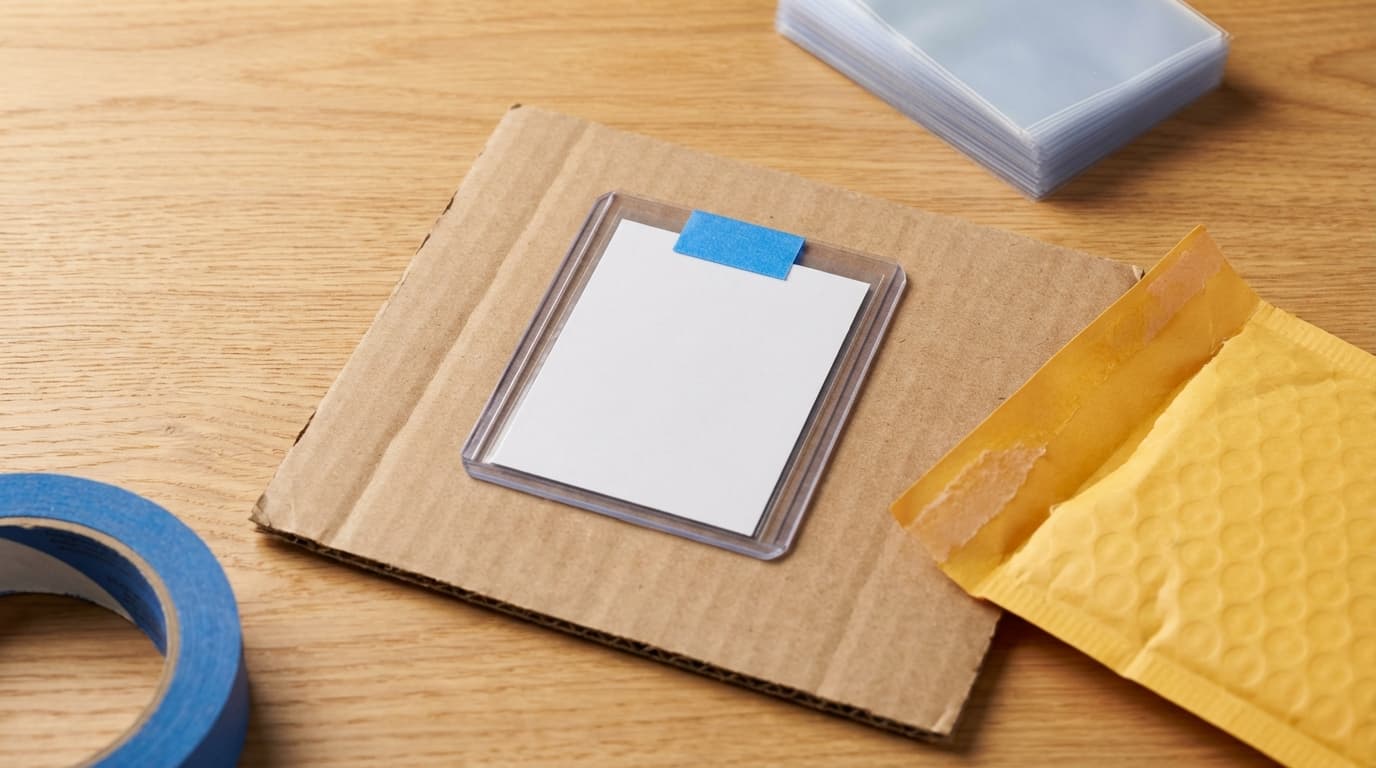
Take a small piece of painter’s tape and place it over the opening of the top loader. This prevents the card from sliding out during transit. Fold a tiny tab at the end of the tape to make it easy for the buyer to remove.
Step 3: Bag It
Place the taped top loader into a team bag. Seal it tight. This protects the card from moisture and keeps the tape secure. If you are shipping 2-3 cards, you can stack them here inside one team bag.
Step 4: The Cardboard Sandwich
Cut two pieces of cardboard slightly larger than the top loader. Place the team-bagged card between the two pieces of cardboard. Use painter’s tape (or masking tape) to tape the four sides of the cardboard together. This creates a rigid "slab" that resists bending.
Step 5: Pack and Ship
Slide the cardboard sandwich into your #000 bubble mailer. It should fit snugly. Seal the mailer, attach your shipping label (usually USPS Ground Advantage), and you are good to go.
Method 2: The Budget Option (Plain White Envelope - PWE)
For cards valued under $20, shipping costs can be a dealbreaker. The "eBay Standard Envelope" allows for cheap tracking in a plain white envelope. However, because these go through sorting machines, flexibility is key.
Step 1: Use a Card Saver
Do not use a rigid top loader for PWE shipping if you can avoid it, as sorting machines can crack them. Use a semi-rigid Card Saver I or II. Sleeve the card first, then insert it into the Card Saver.
Step 2: Thin Protection
Tape the Card Saver to a piece of thin cardstock or a cereal box cutout. You want it to be firm but flexible enough to bend slightly around sorting machine rollers without creasing the card.
Step 3: The Envelope
Place the protected card into a standard #10 envelope. Do not overpack it; it must be under 1/4 inch thick to qualify for most economy shipping rates. Tape the back of the envelope securely.
Method 3: Shipping Graded Cards (Slabs)
Graded cards are already encased, but the plastic cases (slabs) are prone to scratching and cracking (sharding) if dropped.
Step 1: Sleeve the Slab
Most collectors keep their slabs in "slab sleeves" (oversized team bags) to prevent scratching. Ensure the slab is sleeved.
Step 2: The Cardboard Sandwich (Again)
Sandwich the slab between two pieces of cardboard, just like a raw card. This protects the face of the case from pressure.
Step 3: Bubble Wrap
Wrap the cardboard sandwich in two layers of bubble wrap.
Step 4: Box vs. Mailer
- Under $300: A bubble mailer is usually sufficient if the slab is well-wrapped in bubble wrap.
- Over $300: Use a small cardboard box. Place the bubble-wrapped slab in the box and fill any empty space with packing peanuts or crumpled paper so the card does not bounce around.
Common Shipping Mistakes to Avoid
- The Scotch Tape Sin: Never, ever put clear office tape directly on a top loader. It leaves a residue that is nearly impossible to remove, ruining the supplies for the buyer.
- No Penny Sleeve: Putting a raw card directly into a top loader allows the surface to scratch against the hard plastic. Always use a penny sleeve.
- Over-Taping: You do not need to mummify the package. Make it secure, but remember that a human being needs to open it without using a chainsaw.
- Reusing Dirty Supplies: Do not ship a sold card in a yellowed, cracked, or dirty top loader. Supplies are cheap; reputation is priceless.
Conclusion
Shipping is the handshake that concludes your deal. By taking the extra two minutes to package your sports cards correctly using the methods above, you ensure positive feedback, repeat customers, and the longevity of the cards within the hobby. Happy shipping!
Enjoyed this article?
Subscribe for more card collecting tips and market updates